
Infertility affects millions of people in the United States, yet meaningful access to treatment remains deeply unequal. Although infertility is recognized by major medical authorities as a disease, significant economic, geographic, cultural, and systemic barriers prevent many Americans from receiving the care they need. These disparities are shaped by where people live, how much money they earn, who they are, and how they interact with the health care system — resulting in uneven access to diagnosis, treatment, and successful outcomes.
What Is Infertility and Why Does Access Matter?
Infertility is medically defined as the inability to conceive after 12 months of regular unprotected intercourse or a related reproductive issue in individuals or couples seeking pregnancy. It affects both women and men, with roughly 12% of women in reproductive age and nearly 10% of men experiencing impaired fecundity nationwide.
Infertility isn’t merely a medical condition — it has profound psychological, relational, and economic ramifications. Those struggling with fertility often encounter stigma, mental health challenges like depression and anxiety, and social stressors related to family and community expectations.
Despite its prevalence and implications, substantial disparities exist in who gets care — and who doesn’t.
Regional Disparities: Geography and Treatment Access
One of the clearest barriers to infertility care in the U.S. is geography.
Infertility Clinics Are Unevenly Distributed
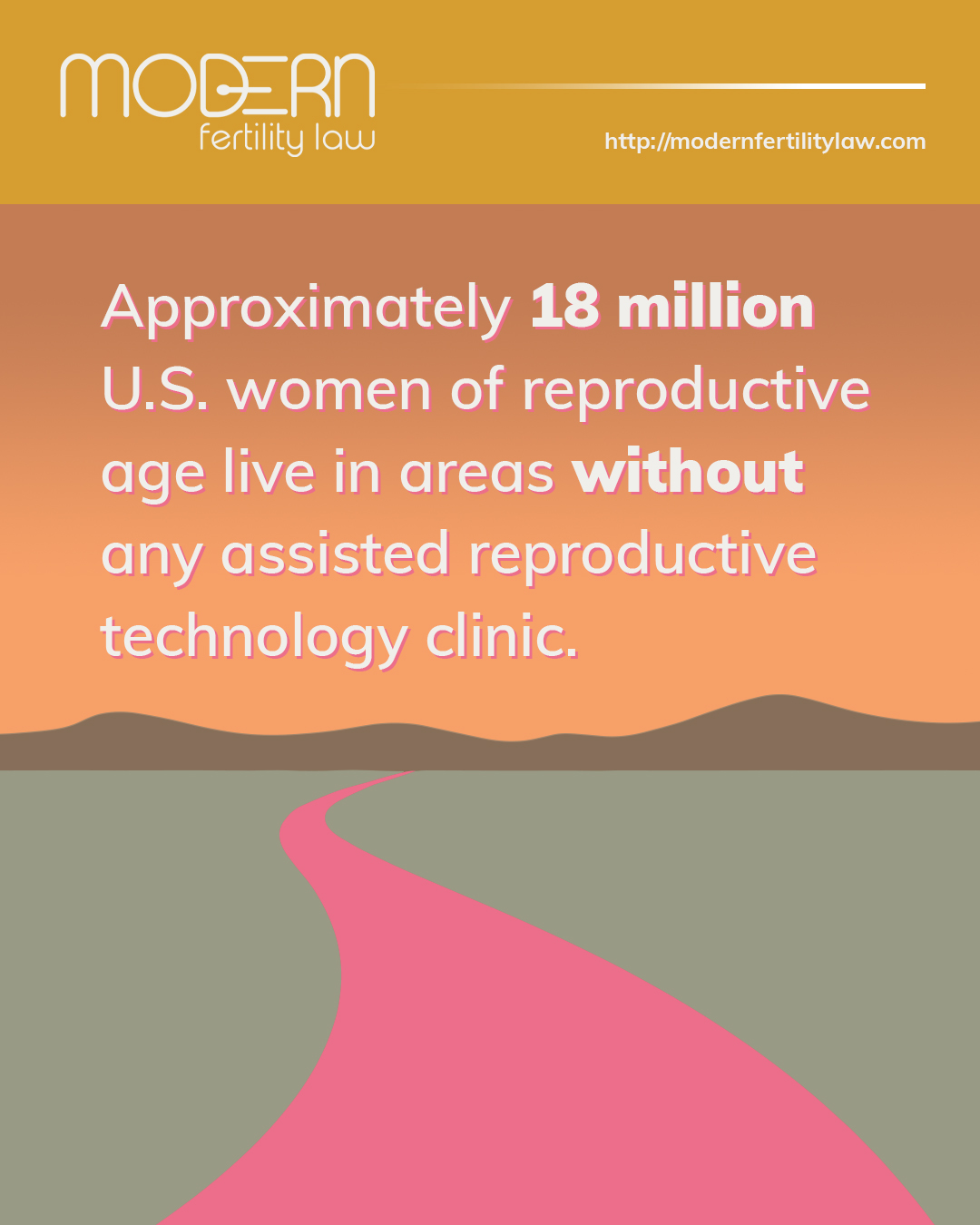
Fertility clinics and specialists such as reproductive endocrinologists are concentrated in urban, high-income areas and states with favorable insurance laws. Many parts of the country — especially rural regions — lack reproductive technology services entirely. Research suggests that approximately 18 million women of reproductive age live in areas without any Assisted Reproductive Technology (ART) clinic, while another several million have access to just one. Springer
Several states — particularly in the South and Midwest — have few reproductive specialists, while states with IVF insurance mandates and higher incomes, such as Massachusetts or Connecticut, tend to have more clinics and providers.
Cost Disparities by Region
Even the costs associated with basic infertility evaluation — before any advanced treatment — vary significantly by region. A study of diagnostic workup costs found that total expenses can range widely, with some states charging nearly four times more than others for the same evaluations. Infertility workups averaged highest in the Midwest and lowest in the West, closely linked to local median income levels. PubMed
This uneven cost landscape means that people living in certain regions may face substantial financial burdens just to get diagnosed, which can deter or delay treatment entirely.
Financial Barriers: The Cost of Wanting a Child
Perhaps the most discussed and profound component of access disparities in infertility care is financial cost.
High Treatment Costs without Insurance
Unlike many medical conditions, fertility treatments — particularly advanced options like in vitro fertilization (IVF) — are seldom fully covered by health insurance in the U.S. Most patients pay out of pocket for fertility care, leading many to incur significant debt or forego care altogether.
Estimating the true cost of treatment depends on individual needs, but a single IVF cycle — including medications — can average around $19,000 or more. If multiple cycles or additional procedures are required, costs can quickly exceed what many households earn in a year.
Thousands of Americans turn to medical crowdfunding or loans to cover these expenses — but success is uneven and often hinges on someone’s social network and visibility, further amplifying inequities. Anecdotal reports from patients describe paying tens of thousands of dollars out of pocket, with many depleting savings or going into debt to afford treatment. Reddit+1
Limited Insurance Coverage
Insurance coverage for fertility care in the U.S. is patchy at best. While 15 states have laws requiring some private insurers to cover fertility services, the requirements vary widely and often exclude major portions of the population. Medicaid, the federal/state program for low-income individuals, rarely covers infertility care — and in most states covers no fertility treatments at all. KFF
Even in states with mandates, large employer plans that are self-insured are exempt from state rules under federal law, meaning many workers receive no coverage despite living in a so-called “mandate state.”
Impact on Lower-Income and Working-Class People
The result of these financial realities is stark: those with lower incomes or less comprehensive insurance are far less likely to pursue or complete infertility treatment. Studies demonstrate that Black and Hispanic women — who on average have lower household incomes — report using infertility care at much lower rates than White women. KFF
Additionally, the fear of rising costs leads patients to delay or discontinue treatment. Some studies report that more than one-third of women undergoing IVF stopped treatment due to cost concerns.
Economic and Insurance Logistics: The System’s Role
The economic disparities in care trace back to systemic features of the U.S. health care system.
Employer Insurance Complexity
The majority of Americans obtain health insurance through employers, but coverage for infertility treatments is far from universal. Only a minority of large employers voluntarily include IVF benefits. For federal employees, Medicaid recipients, and those relying on certain private plans, fertility treatments often remain uncovered. SpringerLink
Moreover, insurance plans may impose restrictive criteria (e.g., requiring months of trying without pregnancy, excluding single or LGBTQ+ individuals) that limit eligibility for covered services. Such administrative barriers functionally exclude many people from care even if insurance nominally covers some treatments.
Cost-Driven Treatment Decisions
When substantial costs fall on patients, treatment decisions often prioritize affordability over medical best practices. For example, some people may choose to transfer multiple embryos in a single IVF cycle to maximize their chance of pregnancy per cycle — a strategy that can increase health risks but reduce financial burden.
Personal and Cultural Barriers
Financial and systemic challenges are compounded by personal, social, and cultural barriers that may dissuade people from seeking care.
Stigma and Misunderstanding
Certain cultural groups may carry stigma around infertility, leading individuals to delay care or avoid medical intervention altogether. Research indicates that within Black, Hispanic, Asian, and Muslim communities, social pressures, communication differences, privacy concerns, and mistrust of the medical system can reduce the likelihood of seeking treatment. Integration
Language barriers and lack of culturally competent education about fertility and available treatments further exacerbate these disparities, as does the uneven distribution of fertility education resources across communities. Springer
Discrimination and Implicit Bias
Studies suggest that Black women are significantly more likely to report race as a perceived barrier to receiving fertility care compared with white women. They are also more likely to cite income and other factors as obstacles. PubMed
In some cases, patients have reported that care providers make assumptions about fertility potential based on race or ethnicity, downplaying concerns or steering patients toward other reproductive goals rather than assisting with fertility problems. Integration
LGBTQ+ and Single Parents
Definitions of infertility that hinge on heterosexual intercourse unintentionally exclude many same-sex couples and single parents, complicating access to coverage and services. LGBTQ+ individuals often face additional administrative hurdles to obtain authorized care or insurance coverage, and sometimes pay out of pocket for donor sperm, eggs, or gestational carrier services that heterosexual couples do not. KFF
Health Disparities in Treatment Outcomes
Access issues extend beyond whether someone receives care to how successful that care is.
Even when treatment is obtained, existing research shows that racial and ethnic minorities may experience lower success rates with fertility treatments like IVF. Studies indicate that Black, Asian, and Hispanic women have lower clinical pregnancy and live birth rates and higher miscarriage rates compared with non-Hispanic white women — a disparity that remains poorly understood but may involve biological, behavioral, or care-related factors. PubMed
Delayed access to care — due to cost, stigma, or systemic barriers — likely contributes to worse outcomes, as older age at treatment is linked to lower fertility success. PubMed
Toward Solutions: Policy and Practice
Addressing disparities in infertility care demands action on multiple fronts:
Insurance Reform
Expanding comprehensive insurance coverage for infertility services across all states and insurance types — including Medicare and Medicaid — would substantially reduce financial barriers. Advocates argue that fertility care should be treated as essential health care rather than an elective option. ACOG
Geographic Equity
Policies that incentivize the establishment of reproductive care centers in underserved areas — or support telemedicine where appropriate — could help mitigate geographic disparities in access.
Cultural Competency
Health systems must improve culturally competent care, address stigma, and ensure language barriers are overcome so that all communities are informed about treatment options and access points.
Data and Research
More research is needed to understand why treatment outcomes differ among groups and how to tailor interventions effectively.
Conclusion
Infertility should be a matter of health equity, not privilege. Yet in the United States, access to infertility treatment is shaped by where someone lives, how much they earn, what insurance they hold, and who they are. Economic barriers, regional imbalances, cultural stigmas, and systemic biases all contribute to an uneven fertility care landscape that disadvantages many Americans.
For a society that values family and health equity, ensuring fair access to infertility treatment — from diagnosis to outcomes — is an urgent priority. Closing these gaps will require thoughtful policy reform, systemic healthcare changes, and a broader societal recognition that building a family is a basic human concern, not a luxury reserved for the few.
Modern Fertility Law has made this content available to the general public for informational purposes only. The information on this site is not intended to convey legal opinions or legal advice. For further information on medical issues, please consult the American Society for Reproductive Medicine.