
• Skip to primary navigation
  • Skip to main content
Modern Fertility Law, APC

Modern Fertility Law, the firm of Milena O'Hara, Esq.

Third-party assisted reproductive law attorney, including surrogacy, egg donation, sperm donation, and embryo donation.

  • Home
  • Services
    • Surrogacy timeline
    • Egg donation timeline
  • Families
  • About
    • Why MFL?
    • Contact
    • EMPLOYEE PROFILE: Jennifer
    • EMPLOYEE PROFILE: Edith
    • EMPLOYEE PROFILE: Kenta
  • Blog
  • English
    • Français
    • עברית
    • 中文 (简体)
    • Deutsch
    • Italiano
  • Show Search
Hide Search

Modern Fertility Law

Planned oocyte cryopreservation: preserving future reproductive potential

Modern Fertility Law · January 7, 2026 ·

Planned oocyte cryopreservation—commonly called elective egg freezing—allows individuals to store unfertilized eggs for future use, decoupling the timing of childbearing from the biological clock. Once an experimental idea, oocyte cryopreservation is now a mainstream reproductive option thanks to technological improvements (particularly vitrification) and wider social acceptance. Here we’ll examine the medical, practical, ethical, legal, and social dimensions of planned egg freezing, and offers guidance on counseling and decision-making for people considering it.

What is planned oocyte cryopreservation?

Planned oocyte cryopreservation is the intentional retrieval and freezing of a woman’s eggs when she is not experiencing infertility—often to preserve fertility against future age-related decline or before life events (career, lack of partner, medical treatments, etc.) that might delay childbearing. The process follows the same initial steps as standard IVF ovarian stimulation: hormonal stimulation to produce multiple mature follicles, transvaginal ultrasound-guided egg retrieval under sedation, and laboratory vitrification (rapid-freeze) of mature oocytes. When the person is ready to attempt pregnancy, eggs are thawed, fertilized (usually by intracytoplasmic sperm injection, ICSI), and resulting embryos transferred or frozen.

Medical effectiveness and limitations

The chief biological rationale for oocyte cryopreservation is that a woman’s egg quantity and quality decline with age—especially after the mid-30s—leading to lower chances of natural conception and higher risks of miscarriage and chromosomal abnormalities. Freezing eggs at a younger age preserves the age-related quality of those gametes.

However, planned egg freezing is not a guarantee of future pregnancy. Success depends on multiple factors:

  • Age at freezing. Younger eggs are more likely to survive thawing, fertilize, implant, and produce a live birth. Most clinics advise freezing in the late 20s to early 30s for maximal benefit, though personal circumstances vary.
  • Number of eggs stored. More eggs increase the probability of achieving one or more pregnancies. Recommended target numbers differ by age and clinic protocols; younger individuals can expect to need fewer eggs for a reasonable chance, while older individuals may require multiple stimulation cycles to reach similar counts.
  • Laboratory technique and clinical expertise. Vitrification markedly improved oocyte survival compared with older slow-freeze methods, but outcome quality still varies by lab standards and embryology skill.
  • Future partner/sperm availability and health. Pregnancy ultimately depends on fertilization with sperm and a receptive uterus; egg freezing only preserves the oocyte side of reproduction.

Clinicians should communicate realistic, individualized success estimates to patients. Broad population statistics are of limited value unless contextualized by the patient’s age, ovarian reserve (e.g., AMH, antral follicle count), and the planned number of eggs.

Risks and side effects

Oocyte cryopreservation carries risks similar to other controlled ovarian stimulation and retrieval procedures:

  • Ovarian hyperstimulation syndrome (OHSS). Rare but potentially serious; modern stimulation protocols and trigger options have reduced its incidence.
  • Procedure risks. Retrieval is minimally invasive but involves anesthesia and small risks of bleeding or infection.
  • Emotional and psychological impact. Patients may experience stress related to procedures, decisions about how many cycles to undergo, and uncertain future outcomes.
  • Financial and opportunity costs. Repeated cycles for older patients can be expensive and time-consuming.

Long-term health effects of stimulation and egg freezing have not revealed major red flags in available data, but ongoing surveillance is needed.

Who typically considers elective egg freezing?

People who choose planned oocyte cryopreservation include:

  • Individuals who wish to delay childbearing for personal, educational, or career reasons but worry about future fertility.
  • Those without a suitable partner but who desire genetic parenthood later.
  • People with family histories suggesting earlier reproductive decline.
  • Some who plan medical interventions (non-oncologic) that could affect fertility.
  • Transgender and nonbinary individuals pursuing gender-affirming care who want to preserve gametes before treatments that reduce fertility.

Each person’s circumstances, values, and reproductive timeline differ; egg freezing may fit some but not others.

Ethical, social, and equity considerations

Elective egg freezing raises several ethical and societal questions:

  • Autonomy and reproductive freedom. Advocates argue egg freezing expands reproductive choice, allowing people to better align life plans with fertility potential. It supports autonomy by decoupling reproduction from immediate life-stage constraints.
  • Medicalization and false reassurance. Critics warn that framing freezing as “insurance” can create false expectations—it does not restore the fertility of a younger person if eggs are frozen later, nor guarantee a live birth.
  • Social pressure and workplace dynamics. Employer-sponsored egg-freezing benefits have stirred debate: some see them as progressive benefits that enable career flexibility; others worry they may tacitly encourage delaying family formation or shift responsibility for work–life balance onto employees rather than organizational culture changes.
  • Access and equity. Egg freezing is expensive and unevenly covered by insurance, potentially widening reproductive inequities. Socioeconomic, racial, and geographic disparities affect who can realistically use this technology.
  • Future disposition and donor issues. Questions can arise about disposition of unused eggs, posthumous reproduction, or legal parentage. Clear legal frameworks and informed consent are vital.

Ethical counseling should not be one-size-fits-all; it must respect individual values while honestly presenting limitations.

Legal and regulatory landscape

Legal rules about gamete storage, disposition, and parentage vary by jurisdiction. Important legal topics include:

  • Consent and contract clarity. Consent forms and storage agreements should spell out who can access or use gametes, how long they’ll be stored, and what happens with abandonment or death.
  • Posthumous reproduction. Laws differ on whether a partner can use eggs after the donor’s death, and on how inheritance and parental status apply.
  • Insurance and employer policies. Coverage for elective egg freezing is rare; some employers offer benefits but may set conditions.

Prospective patients should seek legal counsel when complex scenarios are plausible (e.g., single-parent intent, future changes in relationship status), and clinics should maintain transparent, up-to-date policies.

Counseling and informed decision-making

High-quality counseling is a cornerstone of elective egg-freezing practice. Counseling should cover:

  • Realistic outcomes. Tailored estimates based on age, ovarian reserve testing, and the likely number of eggs needed.
  • Alternative options. Including embryo freezing (if a partner or donor sperm is available), timed natural conception, adoption, and assisted reproductive technologies later in life.
  • Costs, logistics, and timeline. Procedure costs, annual storage fees, and potential future IVF costs must be clear.
  • Emotional preparedness. Discussing expectations, possible regret, and the psychological experience of waiting and decision-making.
  • Legal and ethical consequences. Storage agreements, disposition choices, and contingency planning (e.g., in event of incapacity or death).

Shared decision-making frameworks that combine medical evidence with personal values lead to better alignment between expectations and outcomes.

Cost, access, and public policy implications

Egg freezing is primarily offered in private clinics, with out-of-pocket costs that can be prohibitive. The public policy debate centers on whether reproductive preservation should be considered an essential health service and who should bear the cost. Possible policy approaches include:

  • Insurance mandates or subsidies. Especially for those undergoing medically indicated fertility loss (e.g., cancer treatments), coverage is often justified and increasingly mandated in some places. For elective freezing, policy choices reflect societal values about reproductive autonomy and resource allocation.
  • Regulating employer benefits. Transparency and safeguards can prevent coercive workplace cultures.
  • Public education. Ensuring individuals receive accurate, evidence-based information to avoid misconceptions about guarantees or timing.

Addressing access inequities requires thoughtful policy interventions aligned with broader goals for reproductive justice.

Practical takeaways and recommendations

For individuals considering planned oocyte cryopreservation:

  1. Start with fertility evaluation. Tests like AMH and antral follicle count help estimate ovarian reserve and planning.
  2. Consider timing carefully. Earlier freezing generally yields better outcomes, but personal readiness and resources matter.
  3. Ask for clinic-specific data. Outcomes can vary; good clinics provide transparent success metrics and quality control.
  4. Plan financially and legally. Understand full costs — including storage and future IVF — and complete clear legal paperwork.
  5. Seek counseling. Both medical and psychosocial counseling are critical to align expectations and choices.

For policymakers and health systems: consider frameworks that balance individual autonomy with equitable access, clarify legal frameworks for gamete disposition, and ensure employer benefits do not replace broader structural supports for family-building.

Conclusion

Planned oocyte cryopreservation is a powerful option that can expand reproductive choices and reduce time-pressure anxiety for many people. Its utility depends on age at freezing, number of eggs preserved, and the quality of clinical care. It is not a guaranteed “insurance policy,” and its social roll-out raises important questions about equity, workplace norms, and informed consent. The best practice blends accurate medical information, individualized counseling, legal clarity, and societal attention to access. When offered responsibly and accessed equitably, elective egg freezing can be a meaningful tool within a broader set of reproductive options that enable people to align family goals with life trajectories.

Modern Fertility Law has made this content available to the general public for informational purposes only. The information on this site is not intended to convey legal opinions or legal advice. For further information on medical issues, please consult the American Society for Reproductive Medicine.
“Compassionate Transfer”: Understanding Patient Requests for Embryo Transfer for Nonreproductive Purposes

Modern Fertility Law · January 6, 2026 ·

In the era of advanced reproductive medicine, in vitro fertilization (IVF) offers couples and individuals opportunities to achieve pregnancy that were unimaginable just a few decades ago. IVF involves ovarian stimulation, egg retrieval, fertilization in the laboratory, and — critically — the transfer of one or more embryos into a uterus with the intention of achieving pregnancy. But what happens when patients no longer want to pursue pregnancy but are emotionally or ethically conflicted about the disposition of their cryopreserved embryos?

This question has given rise to a controversial and emotionally charged practice known as compassionate transfer — the intentional transfer of embryos when pregnancy is not desired and is deliberately made highly unlikely to occur. Compassionate transfer raises unique clinical, ethical, legal, and psychosocial issues. Here we’ll what compassionate transfer is, why patients request it, how it is practiced, and the ethical debates it elicits among clinicians, bioethicists, and patients.

1. What Is Compassionate Transfer?

“Compassionate transfer” refers to a situation in reproductive medicine in which a patient requests that embryos — usually cryopreserved IVF embryos — be placed into her body in a manner or at a time when pregnancy is extremely unlikely and with no intention of achieving pregnancy. It can involve placing embryos in the cervix, vagina, or uterus outside a fertile window so that implantation does not occur. The procedure is intended not to create life but to offer a means of “closure” or a psychologically meaningful method of embryo disposition. ASRM+1

According to the American Society for Reproductive Medicine (ASRM), this option reflects a patient’s deeply personal values and is ethically permissible for providers to honor or decline, so long as they do so without discrimination and with appropriate informed consent. ASRM

2. Why Do Patients Request Compassionate Transfer?

Patient motivations for requesting compassionate transfer are varied and deeply personal. Some of the key themes documented in research and ethical discussions include:

2.1 Emotional and Psychological Closure

Many patients view their cryopreserved embryos as emotionally significant – sometimes as “virtual children” or potential lives — even when they no longer wish to build a family. Traditional methods of disposition — laboratory discard, donation for research or to third parties, or indefinite storage — may feel impersonal, disrespectful, or morally unsatisfactory. For these individuals, transferring embryos into their body can represent a meaningful final act: a way to return embryos “home” or allow nature to decide their fate in a way that aligns with personal beliefs about life and dignity. ASRM+1

2.2 Moral and Religious Beliefs

For some people, the thought of direct disposal of embryos — either by the clinic or scientific research — creates moral distress or conflict with their religious, spiritual, or philosophical views about when life begins. A compassionate transfer can serve as a method that they perceive as more consistent with the reverence they hold for embryonic life. ASRM

2.3 Dissatisfaction With Standard Disposition Options

Despite standard IVF consent forms offering options like research donation, third-party donation, laboratory discarding, or indefinite storage, many patients find these insufficient for their needs. Studies suggest that a notable proportion of patients (up to 20%) express interest in compassionate transfer if offered, though relatively few clinics provide it. ASRM

2.4 Psychological Benefit and Agency

Beyond moral reasoning, patients may find psychological peace in choosing their preferred method of disposition, perceiving it as an exercise of autonomy and respect for their values. Some describe it as a form of “closure” or a way to honor the emotional investment attached to embryos. Mayo Clinic

3. Clinical Practice and Variations

Compassionate transfer is rare but not unheard of. Historically, fewer than 5% of IVF clinics in the United States offered it; however, surveys of reproductive endocrinologists suggest that a higher proportion would be willing to accommodate such requests if there were professional practice guidance. ASRM+1

3.1 How It Is Performed

Clinically, compassionate transfer may involve:

  • Placing embryos into the cervix or anterior fornix rather than the uterine cavity.
  • Timing the procedure during a part of the menstrual cycle when endogenous hormone levels are not conducive to implantation.
  • Placing embryos in the uterus when the endometrial lining is not receptive.

The goal is to position embryos in a biologically unfavorable environment for implantation. The procedure itself is similar to a typical embryo transfer but intentionally timed or located to avoid pregnancy. ASRM

3.2 Risks and Outcomes

Although compassionate transfer aims to prevent pregnancy, unintended outcomes are possible — including implantation, miscarriage, or very rarely, ectopic pregnancy. In practice surveys, a few clinicians reported such unintended outcomes. ASRM

Clinicians also cite low utility and resource concerns, given that the procedure has no intended medical benefit for achieving pregnancy. OUP Academic

3.3 Costs and Insurance

Because compassionate transfer serves non-reproductive goals, it typically is not covered by insurance. Patients are often responsible for procedure costs, raising ethical questions about access and equity. ASRM

4. Ethical Perspectives

Compassionate transfer sits at the intersection of reproductive autonomy, clinical ethics, and resource allocation. Ethicists and professional societies have articulated arguments both for and against making it available.

4.1 Supporting Compassionate Transfer

Proponents argue that respecting patient autonomy and reproductive liberty includes allowing individuals to choose how their embryos are disposed of or honored. This aligns with broader principles in medicine that respect a patient’s values and emotional well-being. ASRM

The ethical principle of beneficence — acting in a patient’s best interests — extends to psychological and emotional welfare. For some patients, having a preferred disposition method can lessen moral distress and emotional burden. ASRM

Providing compassionate transfer may also help patients resolve long-term indecision and anxiety about embryo storage, potentially preventing the indefinite freezing of embryos whose future disposition remains unresolved. ASRM

4.2 Arguments Against Compassionate Transfer

Critics argue that there is no medical benefit to compassionate transfer; it is intentionally designed to fail and therefore constitutes “futile” medical practice. This raises concerns about resource utilization, including clinic time, staff effort, and facility access that might otherwise support patients seeking fertility treatment. OUP Academic

Nonmaleficence, the principle of “do no harm,” is invoked by those arguing that unnecessary medical procedures — especially when they carry even minimal risk — should be avoided. ASRM

Some ethicists also point to distributive justice — the fair allocation of health care resources — noting that compassionate transfer benefits only a subset of patients (i.e., those with a uterus), potentially exacerbating inequities. ASRM

Another ethical challenge concerns potential self-deception: fulfilling a patient’s emotional desire for a “natural return” of embryos may inadvertently reinforce inaccurate beliefs about the likelihood of implantation or about embryo identity, rather than prompting patients to reconcile grief and moral concerns through counseling or support. ASRM

5. Clinic Policies and Informed Consent

Given the complexities involved, major reproductive medicine societies encourage clinics to develop explicit written policies regarding compassionate transfer. Such policies should:

  • Define the circumstances under which compassionate transfer may be offered or declined.
  • Outline thorough informed consent procedures, including a clear discussion of risks, alternatives, and the real likelihood of no pregnancy outcome.
  • Clarify costs and responsibility for payment.
  • Address legal considerations, including documentation and reporting requirements.
  • Ensure nondiscriminatory practices. ASRM

In forming policies, clinics are urged to balance respect for patient autonomy with their own ethical principles and clinical judgment. Policies also serve to communicate clearly to patients what options are or are not available, reducing confusion or distress. ASRM

6. Broader Context: Embryo Disposition Challenges

Compassionate transfer arises from a broader challenge in reproductive medicine: deciding what to do with surplus embryos. Advances in IVF have made cryopreservation routine, and a significant proportion of embryos created are never used for pregnancy attempts. Studies suggest that up to 40% of cryopreserved embryos remain unused and stored long-term, leading to complex emotional and ethical dilemmas for patients. ASRM

Traditional disposition options — donation, destruction, indefinite storage — don’t fully capture the emotional landscape of all patients. Some find donation to research laudable but insufficiently personal; others reject donation outright; still others prefer not to bear the emotional burden of discarding embryos they associate with potential life. Compassionate transfer represents one of the emerging, patient-driven responses to these real but often under-addressed needs. ASRM

7. Conclusion

Compassionate transfer — the transfer of embryos with no intent of pregnancy — exemplifies how reproductive technologies have outpaced conventional ethical frameworks. While rare, compassionate transfer highlights profound questions about autonomy, meaning, and the emotional dimensions of fertility care.

Clinicians, patients, ethicists, and policy makers must grapple with the reality that reproductive decisions extend beyond biological outcomes. For some, compassionate transfer offers solace and dignity in parting with embryos; for others, it embodies unnecessary medical intervention and misuse of resources. Balancing respect for patient values with clinical integrity and fair resource allocation requires clear policies, sensitive counseling, and ongoing interdisciplinary dialogue.

As reproductive technology continues to evolve, so too will the ethical considerations surrounding its use — including how best to honor the profound and sometimes conflicted meanings individuals attach to the beginnings of life. Compassionate transfer may remain a niche practice, but its existence sheds light on the multifaceted tapestry of human experiences at the heart of reproductive medicine.

Modern Fertility Law has made this content available to the general public for informational purposes only. The information on this site is not intended to convey legal opinions or legal advice. For further information on medical issues, please consult the American Society for Reproductive Medicine.

Shared Egg Donation Cycles in IVF: Ethical, Practical, Legal, and Personal Dimensions

Modern Fertility Law · January 5, 2026 ·

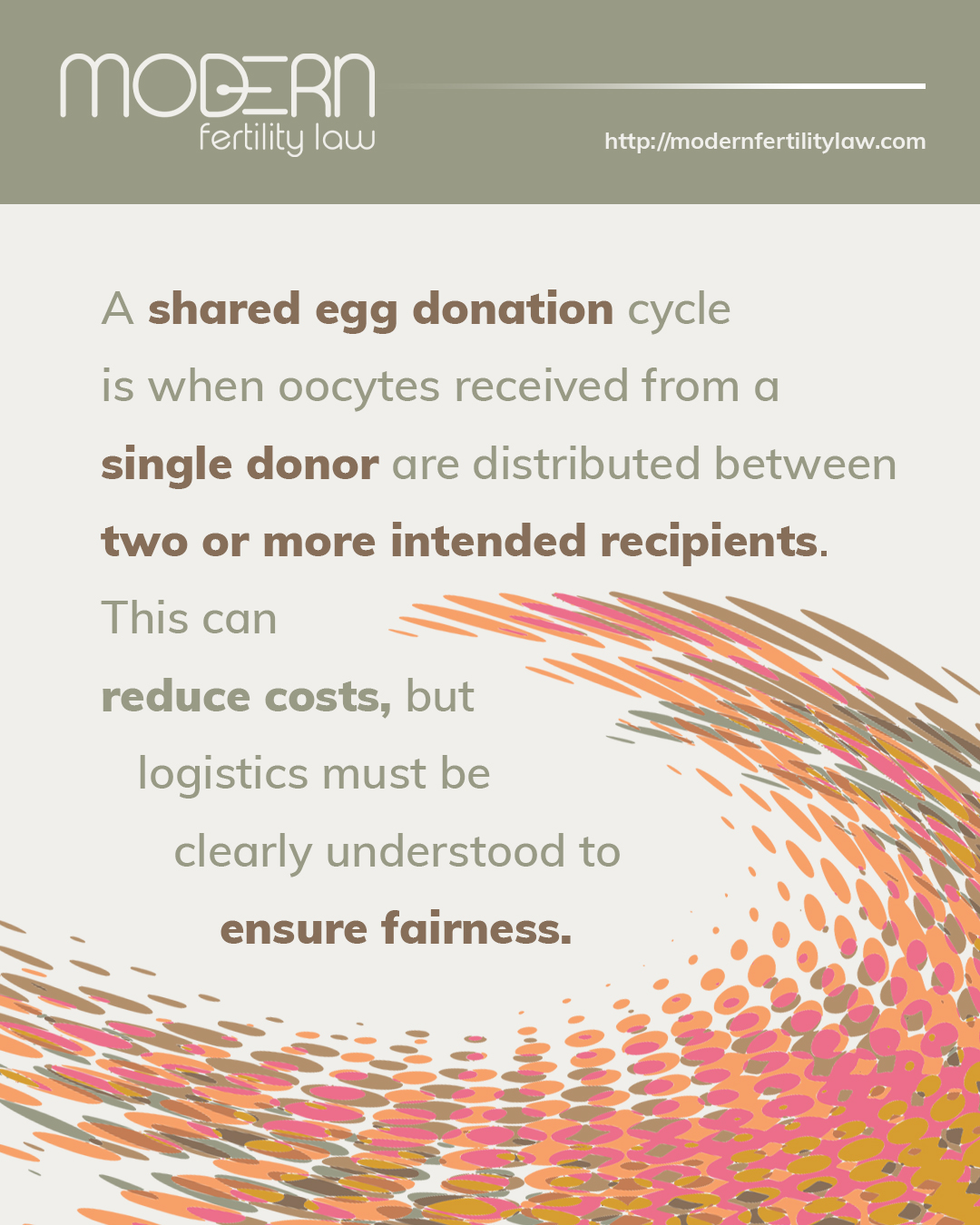
Shared egg donation cycles—also called split cycles or shared donor cycles—represent a unique intersection of reproductive medicine, cost-sharing strategies, and collaborative family building. In these arrangements, a single donor undergoes one ovarian stimulation cycle, and the retrieved oocytes are distributed between two or more intended recipients. This structure can reduce costs for recipients, allow more efficient use of donor resources, and expand access to donor-egg IVF. But it also introduces a multilayered set of ethical, legal, psychological, logistical, and medical considerations. As shared cycles become increasingly common in fertility clinics, a thorough understanding of their implications is essential for patients, providers, and policymakers.

Modern Fertility Law

I. The Foundations of Shared Egg Donation

A. Why Shared Cycles Exist

Egg-donor IVF is one of the most effective fertility treatments but also one of the most expensive. Traditional exclusive donor-egg cycles require the intended parent or couple to bear the full cost of donor screening, compensation, medications, monitoring, and cycle coordination. Shared cycles distribute these expenses across multiple intended families, significantly reducing the financial burden. Clinics may also view shared cycles as a more efficient use of donor time and risk exposure, since donors undergo intensive monitoring and medical intervention.

B. How Shared Cycles Operate

In a shared cycle, one donor undergoes ovarian stimulation. Once the eggs are retrieved, they are divided—usually by predetermined allocation rules—among participating recipients. Distributions may be equal (e.g., a 50/50 split between two recipients) or may reflect differing financial contributions or clinic policies. Recipients typically provide sperm from their partner or a donor. Each recipient proceeds with fertilization, embryo culture, and transfer independently.

While the model seems straightforward, the need for synchrony and fairness adds complexity. Recipients must align their cycles with the donor’s timeline, and success depends on the donor’s response: if the donor produces fewer eggs than anticipated, divisions may be adjusted, cycles converted to freeze-all, or agreements renegotiated.

II. Ethical Dimensions of Shared Donor Cycles

A. Balancing Fairness and Autonomy

Ethical concerns begin with equitable allocation. When eggs are shared, recipients may feel vulnerable to variations in donor performance. Low oocyte yield can leave recipients with fewer eggs than expected, which may impact fertilization potential and cumulative pregnancy opportunities. Clinics must ensure that allocation formulas are transparent, predetermined, and fair. Some clinics guarantee minimum egg numbers; others offer cycle cancellation or discount policies.

The donor’s autonomy must also be protected. Donors must consent not only to egg donation but to the specific structure of a shared cycle. They should understand how their eggs will be divided, the potential for multiple genetically related offspring across families, and the implications for future contact or anonymity, depending on regional policies.

B. Limiting Genetic Dispersion

One distinctive ethical feature of shared cycles is the possibility of multiple recipient families producing offspring genetically related through the same donor and, within some shared cycles, even conceived within the same retrieval event. Clinics and regulatory bodies often impose limits on the number of families that can use a donor’s gametes. These rules aim to mitigate the risk of high numbers of donor-conceived siblings within a geographical area—important both for population genetics and for psychosocial reasons associated with identity and kinship.

Shared cycles increase the concentration of offspring per cycle, so clinics must carefully track donor usage to remain within limits. Recipients may also grapple with the idea that their child could have full genetic siblings raised by other families, and these effects unfold differently across cultures and family values.

C. Psychological Impact on Recipients and Offspring

Parents building families through donor eggs already navigate issues of disclosure, identity, and emotional integration. Shared cycles introduce another layer: offspring from the same cohort may be close in age and appear in genetic-matching databases. Future contact among donor siblings—popular through voluntary registries or direct-to-consumer testing—may be more common.

For some families, this shared genetic network enriches the child’s life. For others, it introduces complex feelings about boundaries, privacy, or kinship. Ethical counseling should include discussions about these eventualities, respecting diverse preferences regarding openness.

III. Practical and Clinical Considerations

A. Cycle Synchronization

A shared cycle requires precise coordination. The donor’s stimulation is the anchor, and recipients must match their uterine preparation to the donor’s retrieval schedule. Clinics often employ:

  • Fresh transfer synchronization, requiring hormonal control to align all cycles.
  • Freeze-all approaches, allowing fertilized eggs or embryos to be cryopreserved and transferred later, easing synchronization burdens.

Freeze-all cycles reduce the emotional and physical stress of coordination, but some recipients prefer fresh transfers based on personal philosophy, cost, or clinical advice.

B. Variability in Donor Response

A key challenge is unpredictability. No matter how carefully donors are screened, ovarian response varies. When egg numbers are low, allocation becomes sensitive. Possible clinic strategies include:

  • Guaranteeing a minimum number of mature eggs per recipient.
  • Allowing recipients to back out or receive partial refunds.
  • Converting shared cycles into exclusive cycles if only one recipient proceeds.
  • Offering priority in future cycles.

Recipients must understand that while cost savings are attractive, the trade-off includes increased exposure to variability.

C. Embryology Considerations

Each recipient’s sperm source introduces different fertilization dynamics. Embryologists separate eggs into recipient-specific batches immediately upon retrieval. Clear labeling, chain-of-custody protocols, and compliance with regulatory standards are essential to avoid mix-ups. Distributed eggs often yield differing numbers of embryos, which can influence perceptions of fairness even when distributions follow the contract.

Clinics must also communicate clearly regarding:

  • Expected fertilization rates
  • How immature or poor-quality eggs are counted
  • Ownership of surplus embryos
  • Policies around freezing, storage fees, and disposition

IV. Legal Dimensions of Shared Egg Donation Cycles

A. Contractual Framework

Legal agreements in shared cycles must be carefully drafted. They typically involve:

  1. Donor agreement – covering consent, compensation, medical risks, disclosure policies, and limits on donor use.
  2. Recipient agreement – detailing allocation procedures, financial arrangements, and contingency plans.
  3. Clinic or agency agreement – specifying responsibilities, cycle coordination, and liability limits.

Because multiple recipients are involved, contracts must protect each party’s rights without creating cross-recipient obligations. For example, recipients should not be legally responsible for outcomes experienced by other participants.

B. Ownership and Allocation Rules

A central legal concept is the definition of egg ownership. Generally:

  • Eggs belong to the donor until retrieval.
  • After retrieval and allocation, each recipient gains legal control over their assigned eggs.
  • Fertilized eggs (embryos) follow parentage laws specific to the jurisdiction.

Contracts must specify how eggs are counted—whether by total retrieved, mature oocytes, or fertilized embryos—and what happens in ambiguous situations.

C. Confidentiality vs. Sharing Information

Privacy laws, including HIPAA (U.S.) and GDPR (EU), restrict sharing medical information across parties. Yet recipients in shared cycles may want reassurance about donor performance. Clinics often provide limited, non-identifying information: age, egg yield, and relevant clinical data about the donor cycle. However, they cannot disclose specifics about the other recipients’ outcomes.

Future identity-disclosure laws (in countries moving away from donor anonymity) may further shape the legal environment. Shared cycles may heighten the need for clarity regarding how donor information can be shared and what rights offspring have to identifying information.

D. Regional Variation

Legal frameworks differ widely across countries and sometimes even within states or provinces. Some countries prohibit shared cycles entirely, while others rely on strict limits on donor usage or emphasize donor anonymity. International intended parents must evaluate legal compatibility between jurisdictions—especially because donor-conceived offspring may later seek information via genetic testing regardless of legal anonymity.

V. Financial Considerations

A. Cost Savings and Trade-offs

Shared cycles fundamentally exist to provide financial relief. Recipients often save 40–60% compared with exclusive donor cycles. Costs are shared for:

  • Donor compensation
  • Medications
  • Monitoring
  • Retrieval fees
  • Agency or clinic coordination

However, reduced cost carries trade-offs:

  • Fewer eggs than an exclusive cycle might provide
  • Greater uncertainty about allocation
  • Potential need for multiple cycles to achieve desired family size

B. Family-Building Planning

Recipients who hope to have more than one child may find shared cycles limiting due to lower embryo numbers. Clinics often encourage recipients to consider future family-building plans and determine whether a shared cycle may compromise their goals. Some patients opt for a hybrid model: starting with a shared cycle and supplementing with frozen donor eggs later if needed.

VI. Donor Experience in Shared Cycles

A. Medical and Emotional Considerations

Donors undergo the same medical procedures as in exclusive cycles, but the idea that multiple families will use their eggs may evoke distinct feelings. Some donors appreciate maximizing impact; others prefer more limited disposition of their gametes. Clinics should provide counseling on:

  • The number of potential offspring
  • Future contact possibilities
  • Disclosure laws in relevant jurisdictions
  • Emotional implications of creating multiple genetic links

B. Compensation and Equity

In shared cycles, donor compensation is usually identical to exclusive cycles, as donors take on the same medical burden. However, because clinics earn multiple recipient fees from one donor cycle, some argue that donors should receive increased compensation. Regulatory bodies in many jurisdictions limit donor compensation to avoid commodification, so payment structures must comply with ethical and legal standards.

VII. Psychosocial and Long-Term Considerations

A. Identity and Disclosure

Today’s cultural landscape is moving toward openness in donor conception. Shared cycles naturally expand the network of genetically related individuals. With consumer DNA testing, donor anonymity is increasingly unsustainable, and families must decide how to discuss donor conception with their children.

Recipients often benefit from counseling that:

  • Normalizes donor conception
  • Provides language for age-appropriate disclosure
  • Anticipates future contact with donor siblings

B. Relationships with Other Recipient Families

Some shared-cycle participants welcome communication with other families, creating supportive relationships and opportunities for sibling connections. Others prefer privacy and independence. Clinics typically avoid arranging contact between recipient families unless everyone opts in explicitly. Families must weigh the potential benefit of an expanded support network against risks of boundary confusion.

C. Offspring Perspectives

Research suggests donor-conceived individuals generally value knowledge about their genetic origins and siblings. In shared cycles, offspring may have more genetically close peers, which could strengthen identity or—if poorly managed—create emotional stress. Empowering families to handle these dynamics with openness reduces long-term conflict.

VIII. Conclusion

Shared egg donation cycles in IVF represent an innovative and increasingly utilized path to parenthood. They offer significant cost advantages, efficient use of donor resources, and the chance for multiple families to benefit from a single cycle. However, these advantages come with complexities: medical uncertainties, legal nuance, ethical questions about family structure and donor usage, and psychosocial considerations that extend far beyond the moment of embryo transfer.

For clinics, clear policies, transparent communication, meticulous legal frameworks, and robust counseling are essential to maintaining fairness and trust. For recipients, shared cycles can be a powerful option when aligned with their financial, emotional, and family-building goals. For donors, ethical consent processes and supportive counseling ensure autonomy and awareness of long-term implications.

As reproductive technologies and societal norms continue to evolve, shared egg-donor cycles will remain at the forefront of discussions about access, equity, identity, and the expanding definitions of family. With thoughtful implementation, they can serve as an effective, ethical, and deeply meaningful means of helping diverse individuals and couples achieve the dream of parenthood.

Modern Fertility Law has made this content available to the general public for informational purposes only. The information on this site is not intended to convey legal opinions or legal advice. For further information on medical issues, please consult the American Society for Reproductive Medicine.

Life After Loss: Posthumous Retrieval and Use of Gametes & Embryos in IVF

Modern Fertility Law · January 3, 2026 ·

The miracles of reproductive medicine have afforded families choices once unimaginable: the ability to create life long after a loved one has died. Posthumous retrieval and use of gametes (sperm or eggs) or embryos for in vitro fertilization (IVF) represents one of the most emotionally charged and legally complex areas of assisted reproduction. These procedures raise pressing economic, personal, health-related, and ethical questions. As reproductive technologies evolve and social norms shift, understanding the ramifications of posthumous conception is essential for patients, clinicians, and policymakers alike.

What Is Posthumous Reproduction?

Posthumous reproduction refers to the retrieval and use of reproductive material from a deceased person to conceive a child. This can occur in several ways:

  • Posthumous Sperm Retrieval (PSR): Harvesting sperm from a recently deceased man for use in IVF or intrauterine insemination.
  • Posthumous Egg Retrieval: Obtaining eggs from a deceased woman for fertilization.
  • Use of Stored Gametes or Embryos: Utilizing previously banked sperm, eggs, or embryos after a person’s death.

Timing matters. For retrieval after death to be medically feasible, especially with sperm, clinicians are often operating within a narrow window (hours) before tissue viability declines. In cases where gametes or embryos are already frozen, timing is less urgent but legal and ethical hurdles remain.

Legal Landscape and Consent Issues

Central to any discussion of posthumous reproduction is consent.

Advance Consent vs. Implied Wishes

In many jurisdictions, explicit consent — written, informed, and documented — is required before gametes can be retrieved or used after death. This consent typically specifies:

  • That the individual agreed to gamete retrieval after death.
  • That surviving partners may use the extracted material for reproductive purposes.

When such consent is absent, clinicians and courts are left to consider implied intent based on statements, past behavior, or relationship status. But assumptions about intent can be contentious.

Legal Status of the Child

Another legal concern is the child’s status:

  • Will the child be recognized as the genetic offspring of the deceased?
  • Does the child have inheritance rights or social benefits?
  • How are parental rights and responsibilities assigned?

Different countries and states vary widely. For example, some European nations strictly require documented consent, while U.S. jurisdictions may allow spouses to petition for posthumous retrieval in certain circumstances.

Economic Considerations

The financial impact of posthumous reproduction is profound — and often prohibitive.

Cost of Retrieval and IVF

Posthumous retrieval procedures are medically specialized and expensive. Costs may include:

  • Emergency surgical retrieval (which can run thousands of dollars)
  • Cryopreservation (freezing and storage fees)
  • IVF cycles, which often cost between $10,000–$20,000 per attempt (excluding medications)

These figures are approximate and vary significantly by clinic, region, and insurance coverage.

Insurance and Access Barriers

Most health insurance policies do not cover:

  • Emergency posthumous retrieval procedures
  • IVF for posthumous conception
  • Storage of reproductive material after death

This lack of coverage exacerbates socioeconomic disparities, making posthumous reproduction primarily accessible to those with financial means.

Long-Term Financial Implications for Families

Using posthumously conceived gametes means planning for:

  • Child-rearing costs over decades
  • Possible legal fees to secure parental recognition or inheritance rights
  • Educational, healthcare, and housing expenses

For couples already facing emotional grief, adding significant financial burden can intensify stress.

Personal and Family Concerns

The decision to pursue posthumous reproduction is deeply personal. It touches on grief, hope, identity, and the evolving meaning of family.

Grief and Emotional Complexity

Choosing life after loss can evoke:

  • Comfort and meaning through the continuation of a loved one’s genetic legacy.
  • Confusion or conflict amid mourning.
  • Emotional distress for extended family members who may disagree about the decision.

Individuals vary in their capacity to separate the idea of a child conceived after loss from their emotional grief. Therapists and reproductive counselors often recommend psychological support during decision-making.

Relationship Dynamics

When a surviving partner chooses posthumous reproduction:

  • How will the child understand their origin?
  • Should the circumstances of conception be shared with the child?
  • How will existing children in the family respond?

Family members may have divergent viewpoints: some may feel joy and continuity, while others may feel that bringing a child into a world without one parent is unfair or emotionally complicated.

Cultural and Religious Perspectives

Different cultures and faith traditions view posthumous conception through distinct lenses. Some see it as a continuation of lineage and family honor. Others raise concerns about timing, intention, or interference with the natural order of life and death.

Health Considerations

Medical Risks for Gamete Retrieval

Posthumous retrieval often involves invasive procedures shortly after death. Sperm retrieval might involve:

  • Testicular aspiration
  • Epididymal extraction
  • Surgical dissection

For egg retrieval after death, similar surgical techniques are required, but they are rarer due to the short period of viability after death, especially without prior ovarian stimulation.

Viability of Retrieved Gametes

Gamete viability declines rapidly as the body cools and biological functions cease. Research suggests that:

  • Sperm can remain viable for a short period after death if the body is cooled promptly.
  • Eggs are far less likely to be retrieved successfully due to timing and the absence of ovarian stimulation.

Sometimes, only cryopreserved gametes or embryos are viable for future IVF.

Health of the Resulting Child

From a biological standpoint, children conceived through posthumous use of gametes or embryos do not appear to be at greater risk for genetic or developmental issues solely due to the circumstances of conception. Long-term studies are limited, but available data on IVF outcomes generally show similar health profiles compared to naturally conceived children when controlling for parental health and other factors.

Mental and Developmental Well-Being

Some clinicians and psychologists caution that children born under these unique circumstances may benefit from thoughtful, age-appropriate conversations about their conception and family structure. Research on psychosocial outcomes is emerging and generally suggests that supportive family environments, rather than mode of conception, are most strongly linked to well-being.

Ethical Considerations

Posthumous reproduction raises layered ethical questions that extend beyond consent and legality.

Autonomy and Intent

Respecting a person’s autonomy — their right to make decisions about their reproductive material — is foundational. But posthumous intent is hard to prove when explicit consent is absent. Relying on implied desire poses the risk of misattributing wishes to someone who may not have wanted to become a posthumous parent.

Rights of the Child

Another ethical layer concerns the child’s right to:

  • Know their biological origins.
  • Be raised within a stable and supportive environment.

Some ethicists argue that it may be unfair to bring a child into the world knowing they will never meet one biological parent. Others counter that children can thrive in loving homes regardless of such circumstances.

Familial and Social Impacts

Families contemplating posthumous conception must weigh:

  • Emotional needs of the surviving partner versus long-term needs of the child.
  • Potential isolation of the child due to societal attitudes or family disagreements.

Community support and openness about reproductive decisions can mitigate potential stigma.

Justice and Access

When only wealthy individuals can afford posthumous IVF, questions of reproductive justice arise. Should access to such technology be equitable? If posthumous reproduction is ethically permissible, should insurers be required to cover it similarly to other fertility treatments?

Religious and Philosophical Beliefs

Different ethical frameworks may shape perceptions of posthumous reproduction:

  • Consequentialist views may focus on outcomes for the surviving family and child.
  • Deontological perspectives emphasize the importance of consent and intention.
  • Relational ethics may center the impact on family relationships.

Faith traditions vary widely: some strictly prohibit reproduction after death, while others may view it as an expression of love and continuity.

Emerging Models and Institutional Guidelines

Medical and reproductive societies are increasingly issuing guidelines to navigate these complexities.

Recommendations Often Include:

  1. Explicit Written Consent: Before retrieval or use of gametes or embryos, individuals should clearly document their wishes.
  2. Time Boundaries for Retrieval: Establishing strict medical windows for safe and ethical retrieval procedures.
  3. Psychological Evaluation: Encouraging counseling for surviving partners considering posthumous reproduction.
  4. Clear Legal Agreements: Prior agreements about inheritance, custody, and future contact with the child.

While guidelines vary, the trend is toward transparency, documentation, and respect for autonomy.

Case Studies and Real-World Examples

Real lives illustrate the complexities of posthumous reproduction.

Scenario 1: The Prepared Partner

A couple undergoes IVF and successfully freezes eggs, sperm, or embryos. One partner dies unexpectedly. Because there was prior consent and documented plans, the surviving partner can use stored embryos without legal dispute. This scenario highlights the value of advance planning.

Scenario 2: The Emergency Retrieval

A man dies suddenly without having banked sperm. His partner seeks posthumous sperm retrieval to preserve the possibility of having his child. Without documented consent, the clinic hesitates, and the case may go to court. Lawyers, ethicists, and family members debate what the deceased would have wanted. Beyond legal determinations, the surviving partner may suffer emotional and financial stress.

Conclusion

Posthumous retrieval and use of gametes or embryos for IVF represents a frontier at the intersection of medicine, law, ethics, and human emotion. The practice offers hope to grieving partners and families who wish to extend a loved one’s legacy. At the same time, it poses real economic burdens, legal ambiguities, and ethical dilemmas.

As reproductive technology advances, so too must our frameworks for consent, access, and care. Comprehensive guidelines, informed consent protocols, psychological support, and equitable policies are essential to ensure that the desire to create life after loss respects individual autonomy, protects children’s welfare, and honors the complexity of human relationships.

Ultimately, these decisions reflect deeply personal values about love, legacy, and the meaning of family — values that deserve thoughtful attention from individuals and society alike.

Modern Fertility Law has made this content available to the general public for informational purposes only. The information on this site is not intended to convey legal opinions or legal advice. For further information on medical issues, please consult the American Society for Reproductive Medicine.

Reproductive and Infertility Care in Times of Public Health Crises: A Comprehensive Overview

Modern Fertility Law · January 2, 2026 ·

Public health crises—whether pandemics, natural disasters, or widespread infectious disease outbreaks—pose significant challenges to health systems worldwide. Among the services most affected are reproductive health and fertility care. Because reproductive services encompass a broad spectrum of care—from contraception and prenatal care to assisted reproductive technologies (ART) and fertility preservation—their disruption during crises can have profound and long-lasting individual and societal consequences.

This overview examines how reproductive and infertility care are disrupted during public health crises, the mechanisms behind these disruptions, their impacts, and strategies to mitigate negative outcomes.

1. Defining Reproductive and Infertility Care

Reproductive health care includes a wide range of services related to sexual health, family planning, maternal health, pregnancy, and childbirth. It also includes access to contraception, safe abortion where legal, prevention and treatment of sexually transmitted infections (STIs), and reproductive education.

Infertility care comprises evaluation and treatment for individuals and couples who experience difficulty conceiving, including diagnostic services and fertility treatments such as in vitro fertilization (IVF), intrauterine insemination (IUI), and fertility preservation techniques.

Both reproductive and infertility services are essential components of comprehensive health care.

2. Types of Public Health Crises and Their General Impacts

Public health crises vary widely:

  • Pandemics (e.g., COVID-19)
  • Infectious disease outbreaks (e.g., Zika, Ebola)
  • Natural disasters (e.g., hurricanes, earthquakes)
  • Technological or environmental emergencies (e.g., chemical spills)

While diverse, these crises share common impacts on health systems: resource diversion, facility closures, staffing shortages, and heightened fear of infection. These disruptions strain healthcare delivery and often disproportionately harm services not deemed immediately “life-saving,” including reproductive and fertility care.

3. Mechanisms of Disruption in Reproductive and Infertility Services

a. Health System Reallocation and Prioritization

In crises, resources (staff, facilities, funding) are often diverted toward emergency response. During the COVID-19 pandemic, many hospitals and clinics postponed elective procedures, including fertility treatments like IVF or IUI, citing infection risk and resource scarcity. Similarly, reproductive health clinics may be repurposed for COVID-19 testing or vaccination, reducing service availability.

b. Policy and Regulatory Responses

Public health directives that restrict movement or deem certain medical procedures “non-essential” can block access to care. During COVID-19 lockdowns, several regions categorized fertility services as non-urgent, leading to widespread suspension of treatments.

c. Supply Chain Interruptions

Crises often disrupt supply chains, affecting availability of essential medicines, reproductive health supplies (e.g., contraceptives), and laboratory materials critical to infertility treatments.

d. Workforce Shortages and Provider Burden

Health workers may be reassigned, fall ill, or face burnout, limiting the workforce available for reproductive care. Specialist providers (e.g., reproductive endocrinologists, gynecologists) may be particularly affected.

e. Patient Behavior and Fear

Fear of infection or misinformation may deter people from seeking in-person care. Patients may delay routine checkups, fertility evaluations, or prenatal care, risking adverse outcomes.

4. Impacts on Reproductive Health Services

a. Contraceptive Access and Unintended Pregnancies

Disruptions in supply and clinic access can lead to contraceptive shortages and reduced family planning services. This increases the risk of unintended pregnancies. During COVID-19, many individuals reported difficulties accessing contraception due to clinic closures or reduced hours.

b. Maternal and Perinatal Care

Routine prenatal visits, ultrasounds, and screening tests sometimes shifted to telehealth or were delayed. While telemedicine provided continuity of care, it could not fully replace hands-on evaluations, particularly for high-risk pregnancies.

In some outbreaks (e.g., Zika), the disease itself posed direct risks to pregnancy outcomes, including congenital anomalies, prompting increased demand for prenatal counseling and testing—often unmet during crises.

c. Safe Abortion Services

In many settings, abortion services were restricted as part of broader limitations on non-emergency care. This had implications for reproductive autonomy and forced delays or travel for care where legal.

d. STI Prevention and Treatment

Public health crises often interrupt screening programs for STIs, including HIV. Deprioritization means delayed diagnoses and treatment, undermining long-term sexual health.

5. Impacts on Infertility Care

a. Suspension of Assisted Reproductive Technologies

Infertility treatments were among the first services paused in many areas during COVID-19 because they were considered elective. This had significant clinical and emotional repercussions for patients, particularly those with age-related fertility decline or diminished ovarian reserve.

b. Delayed Diagnosis and Evaluation

Clinic closures and reduced services delayed fertility evaluations (e.g., hormone testing, semen analysis). Delay in diagnosis can impact treatment timelines and success rates, especially for time-sensitive conditions.

c. Emotional and Psychological Toll

Infertility is already associated with psychological stress. When care is disrupted, uncertainty and anxiety increase, sometimes exacerbating existing mental health conditions.

d. Financial Consequences

Fertility treatments are often costly and may not be covered by insurance. Delays can increase financial strain, especially when treatments must be repeated due to postponed cycles.

6. Disproportionate Effects on Vulnerable Populations

Crises magnify existing inequities in healthcare access:

a. Socioeconomic Disparities

Individuals with lower socioeconomic status often have less access to private care or telehealth, making them more vulnerable to service disruptions. They may lack transportation or face financial barriers that worsen during economic downturns triggered by crises.

b. Racial and Ethnic Inequities

Healthcare disparities rooted in systemic racism are exacerbated during crises. Minority populations often experience higher rates of infection and mortality and face greater challenges accessing reproductive and infertility care.

c. Geographic Barriers

Rural and underserved areas with fewer healthcare providers are disproportionately affected. Clinic closures force patients to travel longer distances if services remain at all.

d. Adolescents and Young Adults

Younger populations may lack knowledge, resources, or autonomy to navigate disrupted services, especially for confidential reproductive care.

7. Innovations and Mitigation Strategies

Despite challenges, public health crises have catalyzed adaptations that can strengthen care delivery.

a. Telehealth Expansion

Telemedicine emerged as a key tool during COVID-19. Virtual consultations allowed continued access to contraceptive counseling, prenatal check-ins, medication refills, and some aspects of fertility care counseling. Telehealth expands access, especially for those in remote regions.

Strengths: Maintains continuity, reduces infection risk, improves convenience.
Limitations: Limited for procedures requiring physical interaction (e.g., ultrasounds, egg retrievals), and dependent on technology access.

b. Task Shifting and Community Health Workers

In resource-constrained settings, training community health workers to provide basic reproductive health services, distribute contraceptives, and support prenatal care can maintain service coverage when clinicians are diverted to crisis response.

c. Flexible Policy and Regulation

Some regions introduced policy changes during crises—for example, allowing multi-month contraceptive prescriptions or expanding the scope of practice for midwives and nurse practitioners to increase service access.

These regulatory adaptations can permanently improve access beyond crises.

d. Prioritization Frameworks

To prevent blanket cancellations of fertility treatments, some professional organizations developed triage systems prioritizing patients based on urgency (e.g., age, ovarian reserve) to minimize negative outcomes. Guidelines for safe continuation, infection control, and patient support were also developed.

e. Mental Health Support Integration

Recognizing the psychological toll, many clinics and public health programs incorporated mental health services into reproductive and fertility care during crises, using virtual support groups, counseling, and stress-management resources.

8. Case Studies from Recent Crises

COVID-19 Pandemic

The COVID-19 pandemic offers the most extensive contemporary example of reproductive and infertility care disruption:

  • Fertility Clinic Closures: Many jurisdictions classified fertility treatments as non-essential, halting IVF and related procedures for weeks to months.
  • Reproductive Health Access: Contraceptive services experienced intermittent closures; however, telehealth helped sustain counseling and prescriptions.
  • Prenatal Care Shifts: Many prenatal visits moved to hybrid models, with in-person visits limited to essential checks.
  • Policy Innovations: Expanded telehealth reimbursement, regulatory flexibility for medication dispensing, and prioritization protocols for fertility care mitigated some impacts.

These shifts underscore the need for resilient systems that can adapt services during emergencies while maintaining essential reproductive care.

Zika Virus Outbreak

During the Zika outbreak (2015–2016), reproductive care faced unique challenges:

  • Risk Communication: Women of reproductive age required accurate information about infection risks during pregnancy and sexual transmission.
  • Family Planning Demand: Calls for access to contraception and safe abortion increased in affected regions, but stigma and legal barriers impeded care.
  • Infertility Impact: Fertility clinics navigated risk of infection and adapted protocols to protect patients and staff.

This crisis highlighted the interplay between infectious disease threats and reproductive decision-making.

9. Long-Term Consequences and Recovery

The effects of disrupted reproductive and infertility care extend beyond the immediate crisis.

a. Delayed Family Planning and Increased Unintended Pregnancies

Disruptions can lead to spikes in unintended pregnancies, with implications for maternal and child health, economic stability, and social services.

b. Fertility Outcomes and Age-Related Decline

For individuals seeking fertility treatment, delays may reduce success rates due to age‐related factors, particularly among women with diminished ovarian reserve.

c. Health System Resilience and Preparedness

Recovery periods offer opportunities to strengthen infrastructure, integrate telehealth sustainably, and build policies that protect essential reproductive services during future crises.

10. Policy and System Recommendations

To safeguard reproductive and infertility care during public health emergencies, stakeholders should consider the following:

a. Designate Reproductive Care as Essential Health Services

Ensuring that reproductive and fertility services are protected and prioritized in emergency planning can prevent blanket shutdowns.

b. Strengthen Telehealth Infrastructure and Access

Investing in technology, broadband access, and training can expand care delivery options, especially for underserved populations.

c. Develop Clear Clinical Guidelines

Professional bodies should create evidence-based guidelines for care continuity during crises, including infection control and triage systems.

d. Address Equity and Social Determinants of Health

Policies must specifically address disparities in access, with targeted strategies for vulnerable groups.

e. Emergency Stockpiles and Supply Chain Planning

Anticipating supply chain disruptions by maintaining essential reproductive health inventories (e.g., contraceptives, hormones) can prevent shortages.

11. Conclusion

Public health crises expose vulnerabilities in health systems, often severely disrupting reproductive and infertility care. These disruptions can have immediate and long-lasting effects on individual lives and broader population health. Lessons from recent emergencies like the COVID-19 pandemic emphasize the importance of system resilience, policy foresight, and adaptability.

Maintaining reproductive and fertility services during crises requires intentional planning, flexible delivery models, and a commitment to equity. By learning from past challenges and building robust frameworks for continuity of care, health systems can better protect reproductive health as an essential component of comprehensive healthcare—no matter the crisis.

Modern Fertility Law has made this content available to the general public for informational purposes only. The information on this site is not intended to convey legal opinions or legal advice. For further information on medical issues, please consult the American Society for Reproductive Medicine.

  • « Go to Previous Page
  • Go to page 1
  • Go to page 2
  • Go to page 3
  • Go to page 4
  • Interim pages omitted …
  • Go to page 21
  • Go to Next Page »
  • Instagram
  • Twitter
  • YouTube

Modern Fertility Law, the firm of Milena O'Hara, Esq.


Privacy Policy | Contact

© 2025 Modern Fertility Law


Attorney Advertisement: This website provides general information related to third-party reproduction and is not intended as legal advice. Visiting this website does not establish an attorney-client relationship with Modern Fertility Law, PC. The information presented here should not be relied upon without seeking professional counsel. Modern Fertility Law, PC does not endorse and is not responsible for any third-party content accessible through this website. Modern Fertility Law, PC expressly disclaims all liability concerning actions taken or not taken based on any or all of the content found on this website.